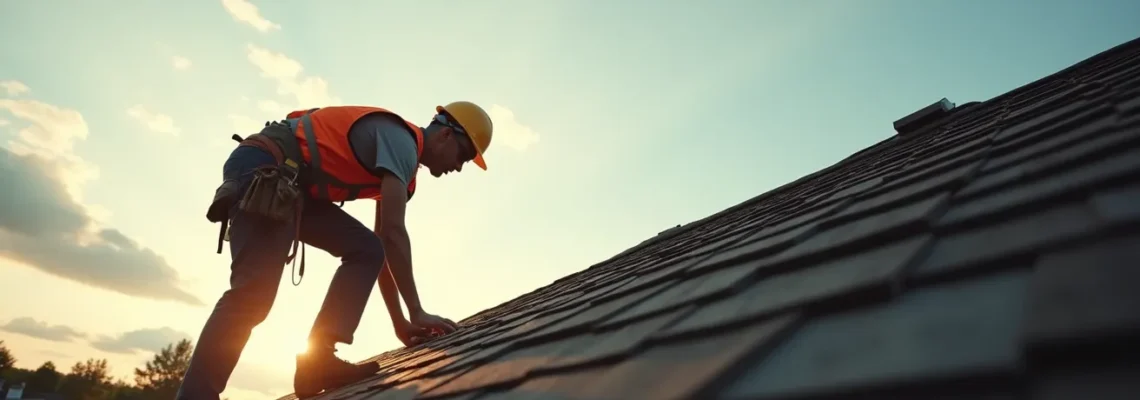
Gravity doesn’t negotiate. On a steep-slope roof, the laws of physics operate with unforgiving precision, creating conditions where human strength and experience become irrelevant within minutes. The steeper the pitch, the faster muscle fatigue compounds, the more exponentially downward force increases, and the less friction between boot and surface matters.
Yet the conversation around roof anchors rarely moves beyond regulatory compliance checklists and generic safety platitudes. This narrow framing misses a transformative reality: properly deployed anchor systems don’t just prevent falls—they unlock operational capabilities, reshape workforce dynamics, and create measurable competitive advantages that extend far beyond liability protection.
The following analysis moves from physical necessity to strategic opportunity, examining how roof anchors function as multidimensional business tools rather than mere safety obligations. From biomechanical thresholds that make anchors physically non-negotiable to innovations redefining what’s possible on extreme pitches, the case for anchor systems extends into territory most contractors have never considered.
Steep-Slope Anchor Essentials
Roof anchors transcend basic fall protection to become strategic assets for steep-slope contractors. Physics dictates that slopes above 6/12 pitch create unsustainable physical strain regardless of worker skill, making anchors a biomechanical necessity rather than a regulatory suggestion. Beyond preventing the catastrophic costs of fall accidents—which average tens of thousands in direct expenses and years of reputational damage—anchor systems unlock access to high-margin commercial contracts, extend viable working conditions into marginal weather windows, and demonstrably improve workforce retention through enhanced psychological safety. Recent engineering innovations in lightweight composites and mobile anchor points have reduced installation time by 40-60% while expanding capabilities to complex geometries previously considered impractical.
Steep-Slope Physics: Why Human Grip Fails Where Anchors Succeed
The human body’s ability to maintain position on an inclined surface depends on a delicate balance between gravitational pull, muscular strength, and friction coefficients. On low-slope roofs between 1/12 and 3/12 pitch, these factors generally align to permit safe movement. But as pitch increases beyond conventional ranges, the equilibrium breaks down with mathematical certainty.
At the critical transition point, slopes often require rope assistance between 30-50 degrees depending on surface conditions, marking where human biomechanics fundamentally fail. This isn’t about training deficits or strength limitations—it’s about physics that no amount of experience can overcome.

The gravitational component acting parallel to the roof surface increases exponentially as pitch steepens. On a 4/12 pitch (18.4°), approximately 32% of body weight pulls the worker downslope. At 8/12 pitch (33.7°), this increases to 55%. By 12/12 pitch (45°), over 70% of body weight constantly pulls toward the edge. No grip strength can counteract this sustained force for extended periods.
Muscle fatigue accelerates this physical reality. Maintaining even a static position on steep slopes requires constant isometric muscle engagement in legs, core, and arms. Studies of occupational biomechanics demonstrate that such sustained loading depletes muscle glycogen stores and accumulates metabolic byproducts within 8-15 minutes, causing progressive strength degradation regardless of fitness level.
| Slope Range | Pitch Ratio | Angle (degrees) | Walkability |
|---|---|---|---|
| Low Slope | 1/12 – 3/12 | 4.8° – 14.0° | Generally walkable |
| Conventional | 4/12 – 8/12 | 18.4° – 33.7° | Requires caution |
| Steep Slope | 9/12 – 12/12 | 36.9° – 45.0° | Not safely walkable |
The friction coefficient between boot treads and roofing materials compounds these challenges. Even aggressive tread patterns on dry asphalt shingles rarely exceed 0.6-0.8 friction coefficients. Morning dew, granule dust, or minor algae growth reduces this to 0.3-0.4. At these levels, the grip force required to prevent sliding on a 10/12 pitch exceeds what sustained leg muscle tension can generate, creating inevitable slip conditions independent of caution or technique.
NIOSH Analysis of Roofing Fall Distances and Impact
Bureau of Labor Statistics examination of 110 documented roofing falls revealed that half involved workers falling distances of less than 15 feet, yet over 50% resulted in fractures requiring extended medical treatment and work cessation. The analysis demonstrated that even relatively low-height falls from steep slopes generate impact forces sufficient to cause career-ending injuries, emphasizing that pitch angle rather than absolute height determines injury severity in many cases.
These physical realities establish roof anchors not as recommended precautions but as biomechanical necessities. The question isn’t whether anchors improve safety—it’s whether work above certain pitches is physically possible without them. The answer, grounded in measurable physics rather than subjective risk assessment, is definitively no.
The Hidden Cost Equation: Accident Liability vs. Anchor Investment
Once the physical constraints are established, the economic question becomes unavoidable: what is the true cost of not equipping teams with anchors when facing these inevitable risks? The typical framing positions anchor systems as safety expenses—budget line items that reduce risk but don’t generate revenue. This perspective fundamentally misunderstands the cost structure.
A single fall accident triggers a cascade of expenses that extend far beyond immediate medical treatment. Direct medical costs for serious fall injuries typically range from $30,000 to $150,000 depending on injury severity. Legal defense fees, even when the contractor ultimately prevails, average $15,000 to $75,000. OSHA violations for inadequate fall protection carry penalties up to $13,653 per violation, with willful violations reaching $136,532.
For roofing contractors, workers’ compensation insurance represents one of the highest operational costs. The median annual workers’ compensation insurance cost is around $9,690 for established contractors with clean safety records. A single serious fall claim can increase premiums by 20-40% for three to five years, adding $6,000 to $15,000 in cumulative excess costs.
Project delays compound these direct expenses. When an accident occurs, work stops immediately for investigation, site remediation, and regulatory review. A typical serious injury incident halts a project for 3-7 days. On commercial contracts with liquidated damages clauses of $500-$2,000 per day, this translates to $1,500 to $14,000 in contractual penalties beyond the lost productivity.
| Cost Category | Conservative Estimate | Typical Range |
|---|---|---|
| Direct Medical | $30,000 | $30,000 – $150,000 |
| Legal Defense | $15,000 | $15,000 – $75,000 |
| OSHA Penalties | $13,653 | $13,653 – $136,532 |
| Insurance Premium Increase (5-year) | $6,000 | $6,000 – $15,000 |
| Project Delays | $1,500 | $1,500 – $14,000 |
The reputational multiplier extends these costs across years. Commercial and institutional clients increasingly conduct safety record reviews during contractor selection. A serious accident within the past 36 months typically disqualifies contractors from shortlists, regardless of technical competency or competitive pricing. In high-margin commercial segments where individual projects range from $150,000 to $2 million, being excluded from even one bid opportunity due to safety record concerns can exceed the total cost of comprehensive anchor system implementation.
Against this cost structure, anchor system investment becomes transparently protective. A professional-grade roof anchor system for a typical crew costs $3,000 to $8,000 for initial setup, with annual inspection and maintenance adding $300 to $600. Amortized over a five-year equipment lifecycle and distributed across dozens of projects, the per-project cost rarely exceeds $150 to $300—a rounding error compared to the six-figure risk exposure of a single accident.
OSHA-compliant rooftop fall protection solutions ensure worker safety and enhanced productivity, creating measurable risk reduction that translates directly to insurance leverage and contract competitiveness.
– Industry Analysis, Fall Arrest Safety
Cost-Benefit Analysis Steps for Roof Anchor Systems
- Calculate reduced cost of ownership by incorporating anchors in initial building design and project planning rather than retrofitting after incidents
- Factor in annual inspection, certification, and maintenance costs over equipment lifetime to establish true total cost of ownership
- Compare potential single-accident liability costs—averaging $65,000 to $390,000 when all factors are included—to anchor system investment of $3,000 to $8,000
- Document insurance premium reductions from certified anchor installations, which can reach 10-15% for contractors demonstrating comprehensive safety protocols
This equation repositions anchor systems from expense category to financial protection, transforming the discussion from “Can we afford this?” to “Can we afford not to implement this?” The return on investment becomes evident not in revenue generation but in catastrophic cost avoidance and insurance optimization.
Operational Capabilities Unlocked: High-Value Projects Requiring Anchors
Beyond financial protection, anchor systems function as market access tools, opening contractor capabilities to project categories that non-equipped competitors simply cannot pursue. This dimension of anchor value remains largely unexplored in industry discussions, yet it represents perhaps the most significant long-term business impact.
Commercial and institutional Request for Proposal (RFP) documents increasingly include explicit safety equipment requirements in contractor qualification sections. Government contracts, university facilities, hospital systems, and corporate campuses routinely mandate documented fall protection protocols including certified anchor systems as baseline qualification criteria. Contractors lacking these systems are automatically disqualified regardless of pricing or technical expertise.
The roofing anchors market reflects this expanding demand, with the market projected to reach $848.10 billion by 2033, growing at 6.2% CAGR, driven substantially by commercial and institutional safety requirement expansion. This growth trajectory indicates that anchor requirements are becoming industry standard rather than premium specifications.
Multi-story buildings and extreme-pitch architectural projects represent another capability tier. Residential developments increasingly feature complex rooflines with 10/12 to 14/12 pitches for aesthetic differentiation. These designs are technically executable only with reliable anchor systems. Contractors who can credibly bid these projects access premium pricing tiers—typically 15-25% higher margins than standard residential work—while competitors without anchor capabilities must decline the opportunities entirely.
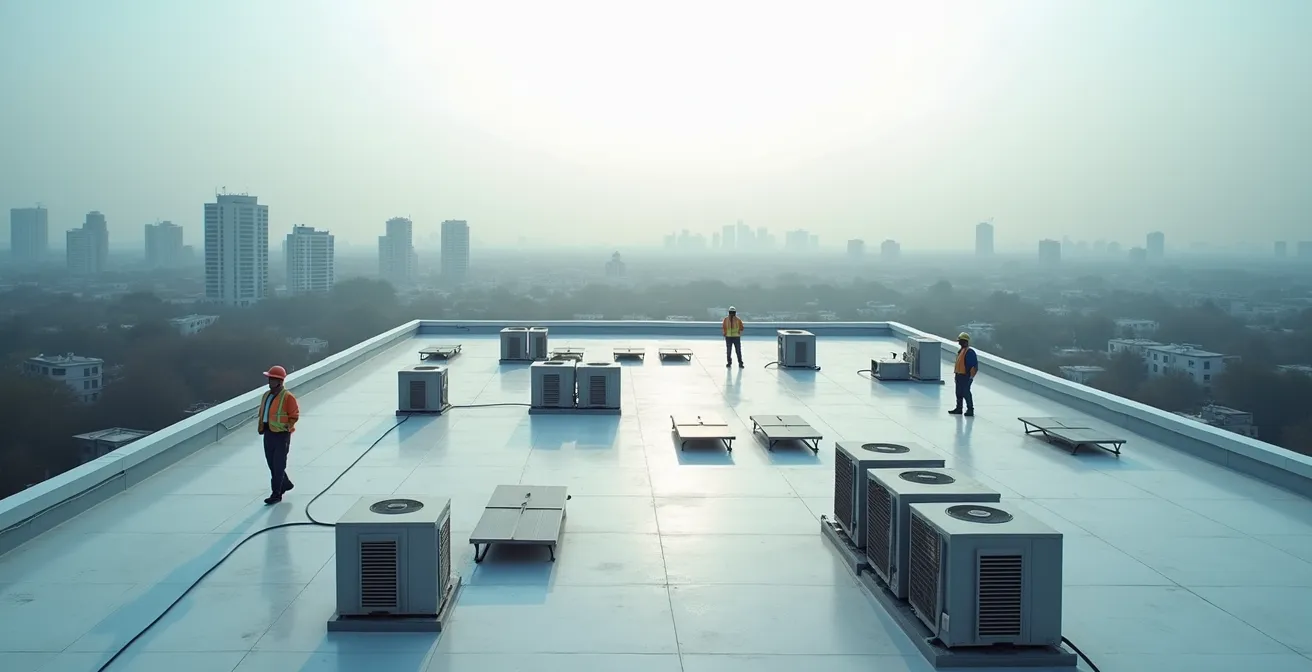
Weather window expansion creates subtler but measurable operational advantages. Morning dew, light precipitation, and marginal temperature conditions force unanchored crews to delay work start times or cease operations early. Anchored workers can safely operate in these borderline conditions, expanding effective working hours by 1-3 hours per day during shoulder seasons. Over a 120-day active roofing season, this translates to 120-360 additional billable hours—equivalent to adding 3-9 full working weeks of capacity without increasing crew size.
Subcontractor relationship dynamics also shift. General contractors managing large-scale renovations or new construction increasingly mandate comprehensive safety documentation from all trades. For roofing subcontractors, demonstrating anchor system protocols and certified equipment creates preferred vendor status, leading to repeat engagement and negotiation leverage. One established relationship with a general contractor managing $50-200 million annual volume can generate steady project flow worth $500,000 to $2 million annually to the roofing specialist.
These operational capabilities demonstrate how anchors transcend safety equipment categorization to become strategic business development tools, directly enabling revenue opportunities that would otherwise remain inaccessible regardless of technical competency or competitive pricing.
Workforce Confidence Architecture: How Anchors Reduce Turnover and Boost Performance
The expanded operational capabilities hold value only if contractors can maintain stable, skilled crews capable of executing the work. This human capital dimension reveals perhaps the most overlooked anchor system benefit: the measurable impact on workforce psychology, performance quality, and retention economics.
When workers secured by anchors focus mental and physical resources on installation technique rather than survival instinct, craftsmanship quality demonstrably improves. Callbacks for improper shingle alignment, inadequate sealant application, or flashing errors decrease as cognitive load shifts from position maintenance to task execution. While difficult to quantify precisely, experienced contractors report 10-20% reductions in quality-related callbacks after implementing comprehensive anchor protocols.
By investing in hardware contractors and employees feel safer using, they will be able to focus on their tasks, be more productive, and feel more peace of mind throughout their work.
– Safety Analysis, Tractel
Experienced worker retention represents a critical but undervalued business metric. Veteran roofers in their 40s and 50s increasingly prioritize employers with comprehensive safety systems as career longevity concerns intensify. The replacement cost for an experienced crew leader—factoring recruiting, training, productivity gaps, and knowledge loss—typically ranges from $8,000 to $15,000. Anchor systems that extend veteran worker careers by even 2-3 years generate substantial retention value.
| Performance Metric | Without Comprehensive Anchors | With Anchor Systems |
|---|---|---|
| Worker Mental Focus | Divided between task and survival | Concentrated on craftsmanship quality |
| Training Effectiveness | Limited by fear-driven caution | Accelerated through equipment confidence |
| Safety Compliance | Inconsistent adherence under pressure | Systematic protocol integration |
Recruitment competitive advantage operates in tight labor markets where skilled roofers have employment options. Job postings highlighting certified anchor systems and comprehensive safety cultures attract higher-quality candidates who self-select for professionalism and career orientation rather than transient labor seeking quick income. The caliber differential translates directly to project execution quality and client satisfaction metrics.
Training efficiency accelerates when new workers reach baseline productivity faster through equipment-managed fear reduction. The typical learning curve for steep-slope work extends 6-12 months as workers gradually overcome height anxiety and develop position confidence. Anchor systems compress this timeline to 3-6 months by separating skill acquisition from fear management, reducing the costly apprentice period where labor costs exceed productivity value.
These workforce dynamics demonstrate that anchor systems generate value through human capital optimization, creating measurable improvements in retention economics, recruitment quality, training efficiency, and performance consistency that compound across years of operation.
Key Takeaways
- Physics makes anchors mandatory above 6/12 pitch where gravitational forces exceed sustainable human grip
- Single accident costs averaging $65,000-$390,000 dwarf $3,000-$8,000 anchor system investments with 5-year ROI
- Commercial RFPs increasingly require certified anchors, automatically disqualifying non-equipped contractors from high-margin projects
- Workforce retention improves measurably through enhanced psychological safety, reducing costly turnover of experienced crews
- Modern lightweight anchor innovations reduce installation time 40-60% while expanding capabilities to complex geometries
Engineering Evolution: Anchor Innovations Redefining Steep-Slope Possibilities
With the strategic value of anchor systems established across physical necessity, economic protection, operational expansion, and workforce optimization, emerging technological innovations maximize these advantages through enhanced efficiency, expanded capability, and reduced implementation friction.
Lightweight composite anchor systems represent the most significant material science advancement. Traditional steel anchors weighing 12-18 pounds per unit required substantial physical effort for transport and installation, particularly when repositioning across large roof sections. New-generation composites using aircraft-grade aluminum and carbon fiber reinforcement deliver equivalent 5,000-pound load ratings at 40-60% reduced weight, transforming handling dynamics and reducing installation time by comparable margins.
Mobile anchor points and rail systems address the geometric complexity challenge inherent in modern architectural rooflines. Fixed anchors require precise pre-positioning and create workflow inefficiencies when work zones shift. Continuous rail systems allow anchor points to slide along tracks, enabling workers to reposition without disconnecting from fall protection or reinstalling anchor hardware. For complex steep-slope geometries with dormers, valleys, and ridge transitions, this continuous mobility reduces setup time from 45-60 minutes per zone to 8-12 minutes.
| Feature | Traditional Methods | Modern Adjustable Systems |
|---|---|---|
| Installation Process | Requires scaffolding or ladder staging | Can be set from ladder position, easily repositioned along ridgeline |
| Pitch Compatibility | Fixed angle limitations | Adjustable 6/12 to 12/12 pitch selection without hardware changes |
| Weight Profile | Heavy steel construction 12-18 lbs | Lightweight aircraft-grade aluminum 5-8 lbs maintaining 5,000+ lb capacity |
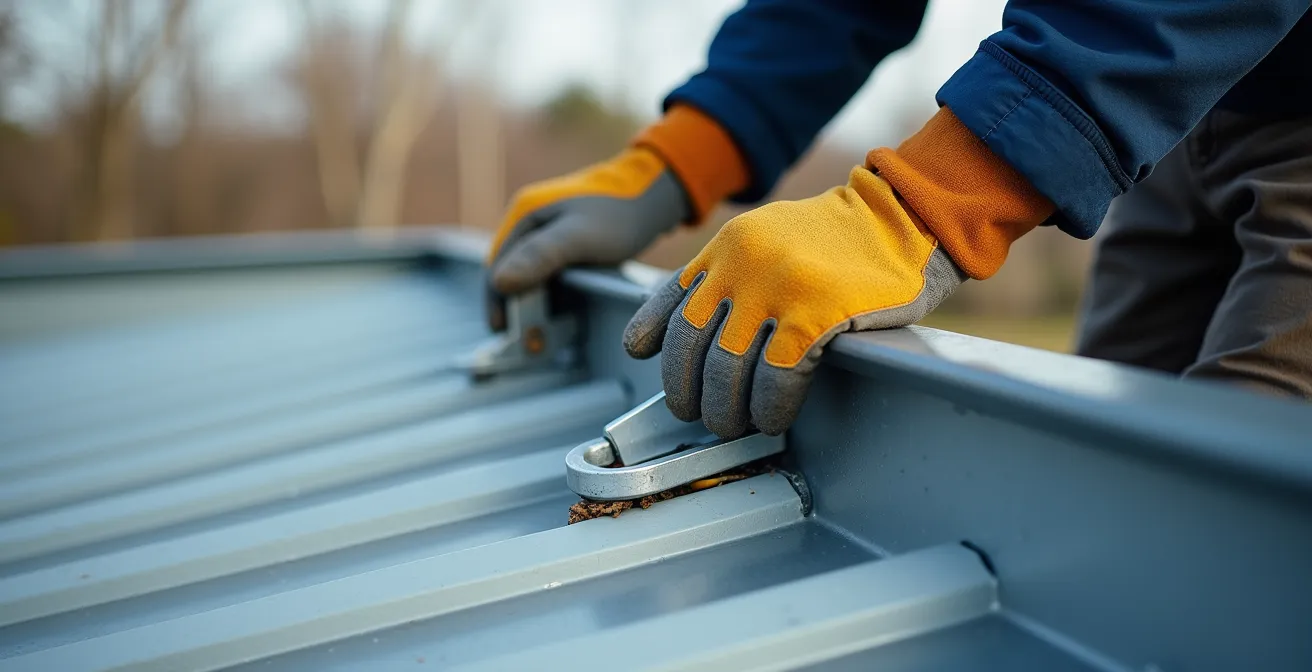
Integrated fall-arrest ecosystems introduce digital connectivity previously absent from roofing safety equipment. Modern anchor systems now communicate with smart harnesses equipped with accelerometers, GPS positioning, and biometric monitors. This integration provides real-time safety analytics including worker location tracking, fall event detection with automatic emergency notification, and compliance documentation automatically generated for regulatory reporting. For contractors managing multiple crews across dispersed job sites, this visibility transforms safety management from retrospective incident review to proactive risk monitoring.
Temporary anchor adhesion breakthroughs expand anchor viability to project categories where permanent installation is prohibited. Historic restoration work, landmark buildings, and architectural preservation projects traditionally excluded mechanical anchors due to roof penetration restrictions. New chemical adhesion systems and vacuum-based temporary anchors create 3,000-5,000 pound hold capacity without penetrating roof membranes, then release cleanly upon project completion. This innovation opens anchor-based safety to premium restoration segments previously requiring alternative fall protection approaches with inferior performance characteristics.
Key Features of Next-Generation Anchor Systems
- Smart wearables with biometric monitoring tracking vital signs and GPS-enabled position monitoring for real-time crew safety oversight
- Robotic tools and automated machines performing repetitive anchor positioning tasks and reducing physical strain on installation crews
- Adjustable pitch systems accommodating multiple roof slopes from 6/12 to 12/12 without reinstallation or hardware changes
- Lightweight composite materials reducing installation time by 40-60% compared to traditional steel anchors while maintaining equivalent 5,000+ pound load ratings
These engineering advances collectively address the historical objection that anchors slow workflow and constrain movement. By reducing installation time, enabling continuous mobility, providing digital oversight, and expanding application scenarios, modern anchor technology transforms from necessary constraint to performance enabler. For steep-slope contractors, staying current with these innovations becomes essential not just for safety optimization but for maintaining competitive positioning as industry standards evolve and client expectations rise.
Those seeking to implement comprehensive safety systems for complex projects can explore roofing solutions that integrate multiple protection technologies. Similarly, contractors managing broader home renovation projects benefit from understanding how roofing safety protocols connect to comprehensive project risk management frameworks.
Frequently Asked Questions on Roof Safety Tools
What safety equipment requirements appear in institutional RFPs?
Permanent anchors and certified fall protection systems have become standard specifications in commercial and institutional contracts as of 2024. Most government, university, hospital, and corporate facility RFPs include explicit documentation requirements for anchor certifications, inspection records, and crew training protocols as baseline contractor qualifications.
How do anchor requirements affect contractor selection?
Contractors without certified anchor systems are automatically disqualified from high-margin institutional projects during initial qualification screening. Safety equipment documentation has moved from competitive differentiator to mandatory baseline requirement, particularly for projects involving multi-story buildings or steep-slope architectural designs.
What is the typical lifespan of a professional roof anchor system?
Professional-grade anchor systems typically maintain certification for 5-7 years with proper annual inspection and maintenance. However, actual equipment lifespan often extends 10-15 years when hardware shows no degradation during inspections. The key factor is consistent certification through qualified inspectors rather than arbitrary replacement timelines.
Can anchor systems be used across different roof types and materials?
Modern adjustable anchor systems accommodate multiple roof materials and pitch ranges from 6/12 to 12/12 slopes. Compatibility depends on anchor design—ridge-mounted systems work across various shingle, metal, and tile applications, while membrane-penetrating anchors require material-specific installation protocols. Consult manufacturer specifications for precise compatibility guidance.